
What the homeowner noticed
Most people call Pro Pool Team for leak detection when they notice the same thing: the pool needs topping off more often than it should. Florida heat makes it hard to tell normal evaporation from a real leak. When the water keeps dropping, a proper check is the fastest way to stop guessing and stop paying for lost water.
What we tested
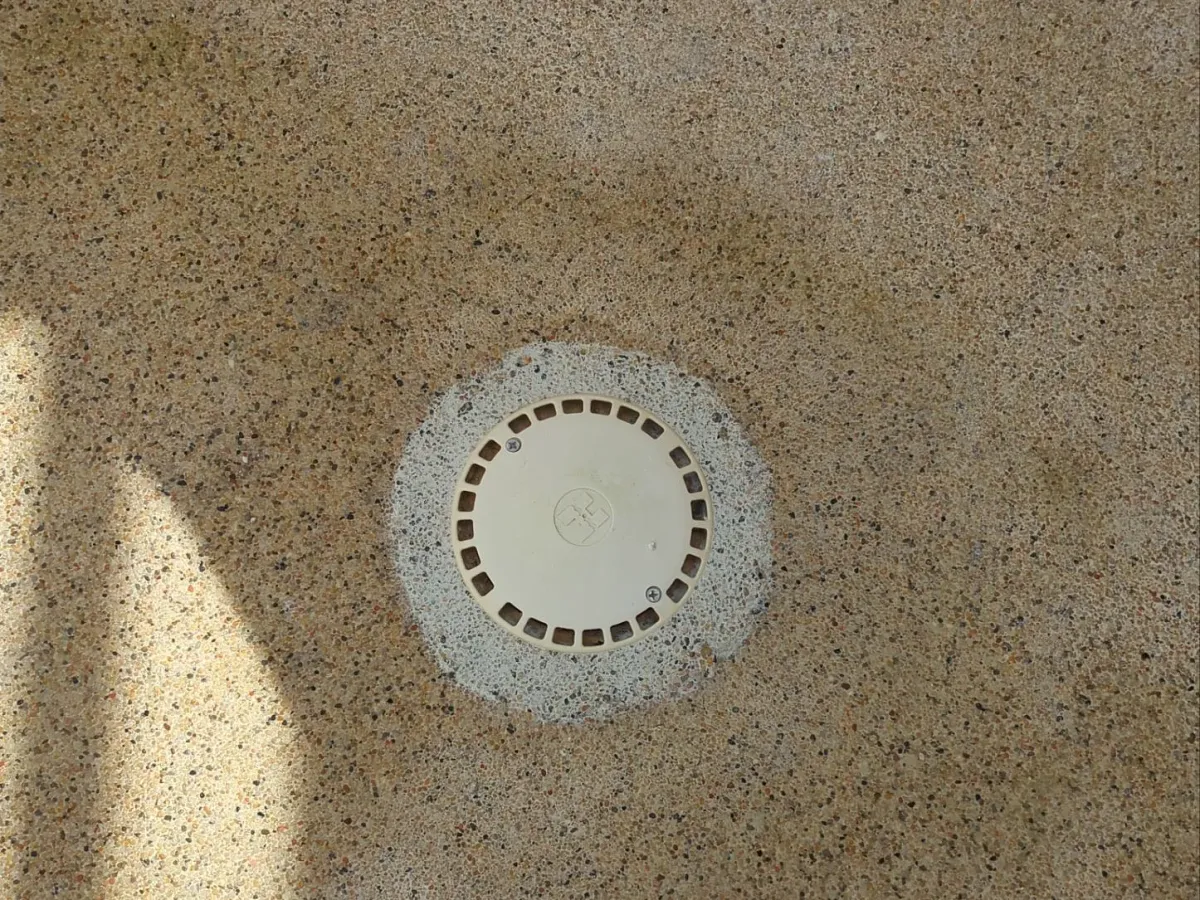
On this job we looked at the whole system, not just one spot. We started with the main drains, the round drains on the floor at the deep end. This pool has two, and we checked both up close underwater. We also checked the pool shell and walls. The shell is the concrete structure under the smooth finish, and we looked for cracks from the floor up to the waterline.
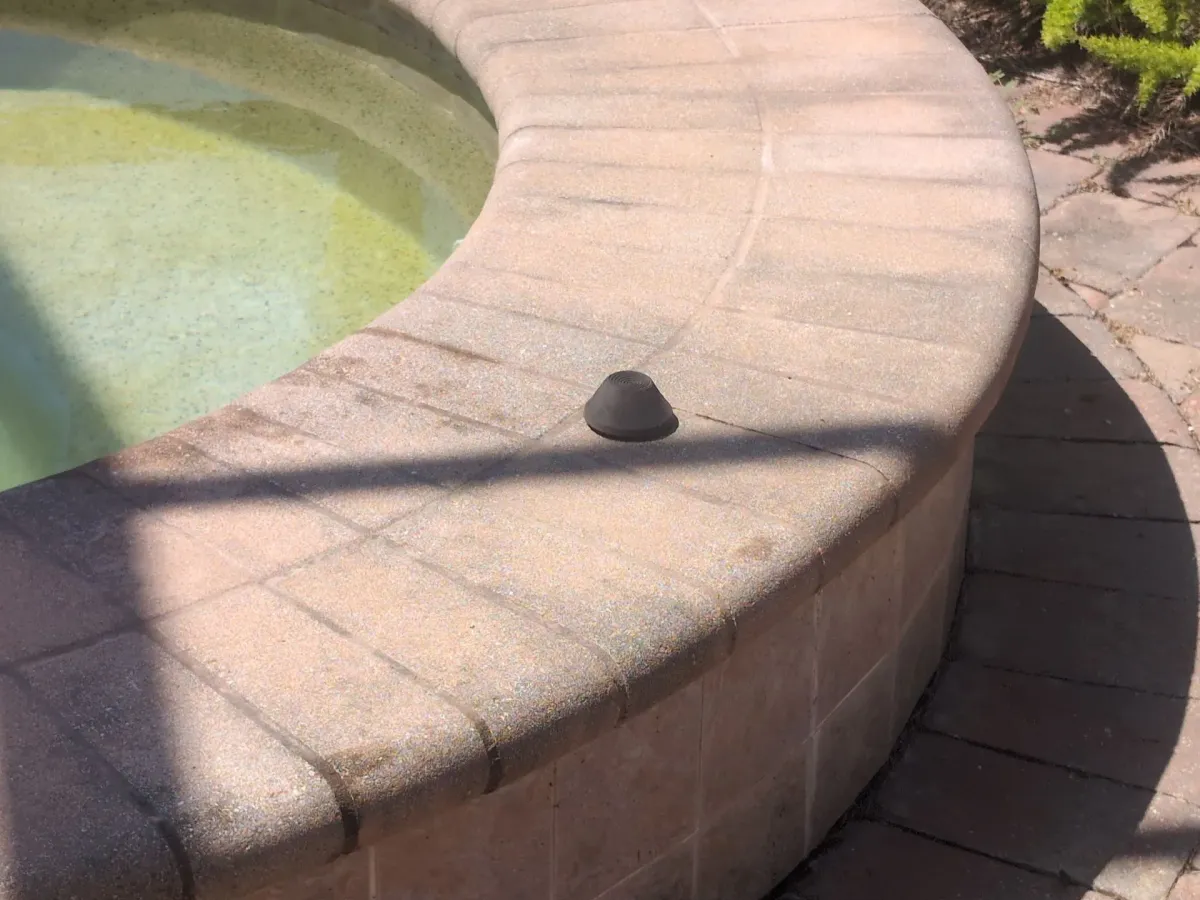
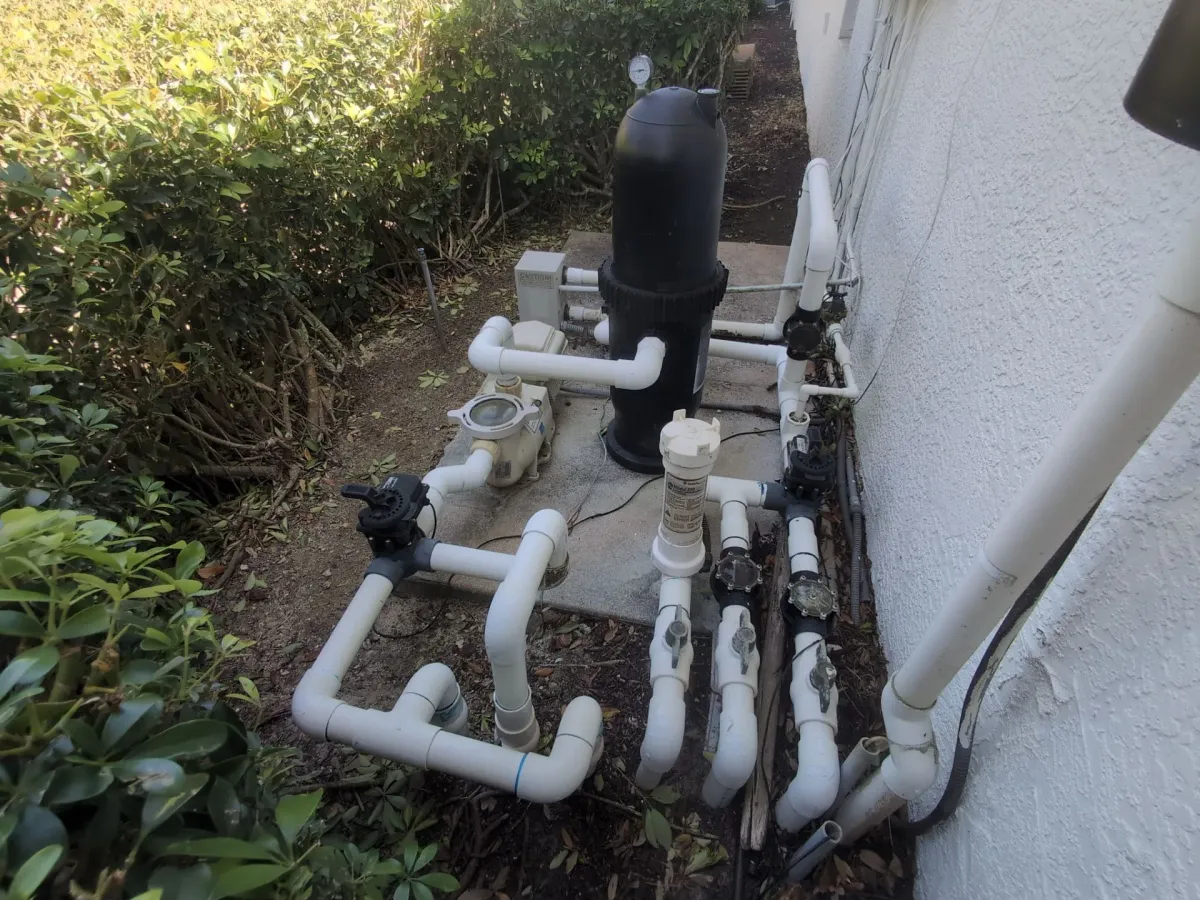
Next came the tile line and coping. The tile line is the band of tile at the water's surface, and the coping is the row of cap stones along the pool edge. Cracks here often point to movement in the structure. The pavers around the pool can tell a story about settling ground, so we checked the deck too. Finally, we looked over the raised spa and the equipment pad, where the pump, filter and valves sit, as part of the full check.
What we found
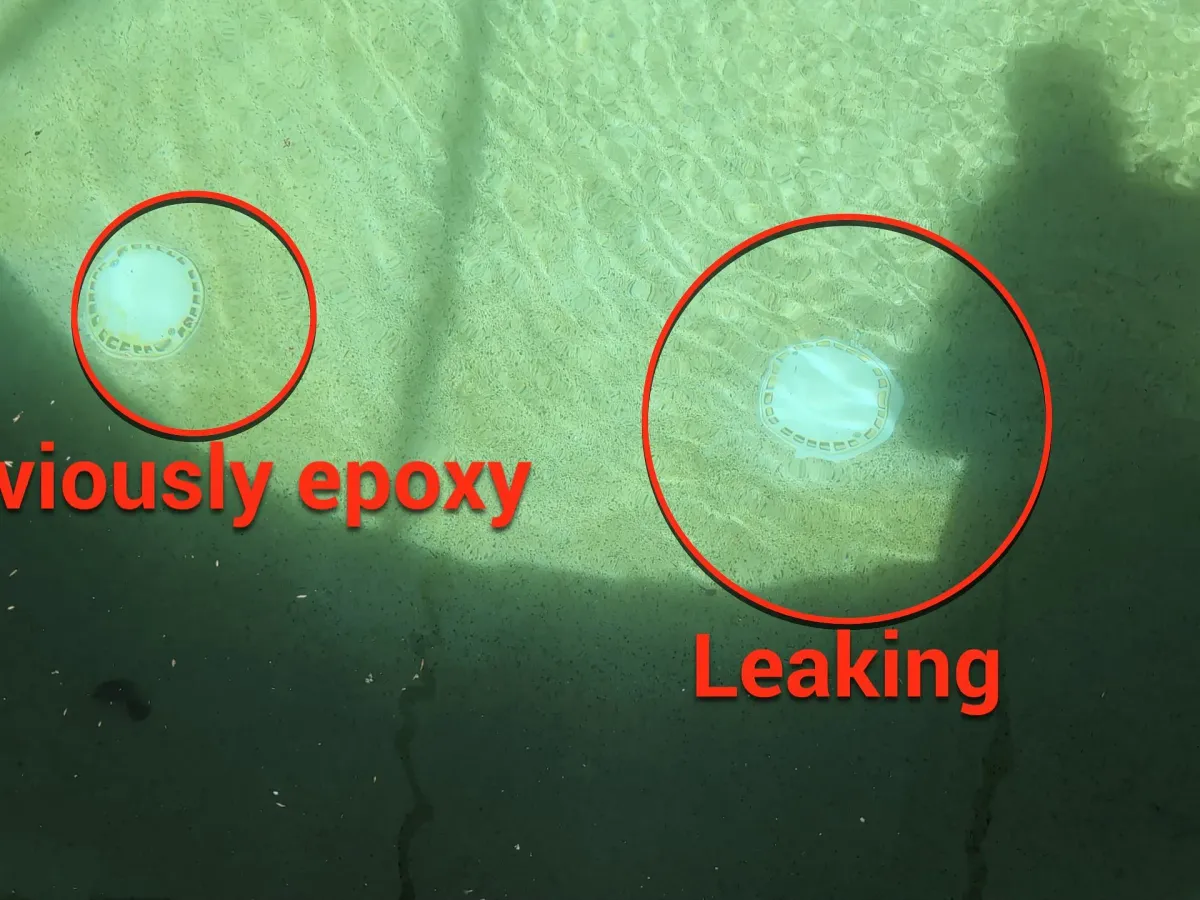
A leaking main drain. In the first photo, both main drains are circled. The one on the left had been sealed with epoxy (a hard, waterproof patching compound) at some point in the past. The one on the right is marked "Leaking." So one drain had already been patched, and the second one is now the problem. This is the kind of job our main drain leak repair work covers.
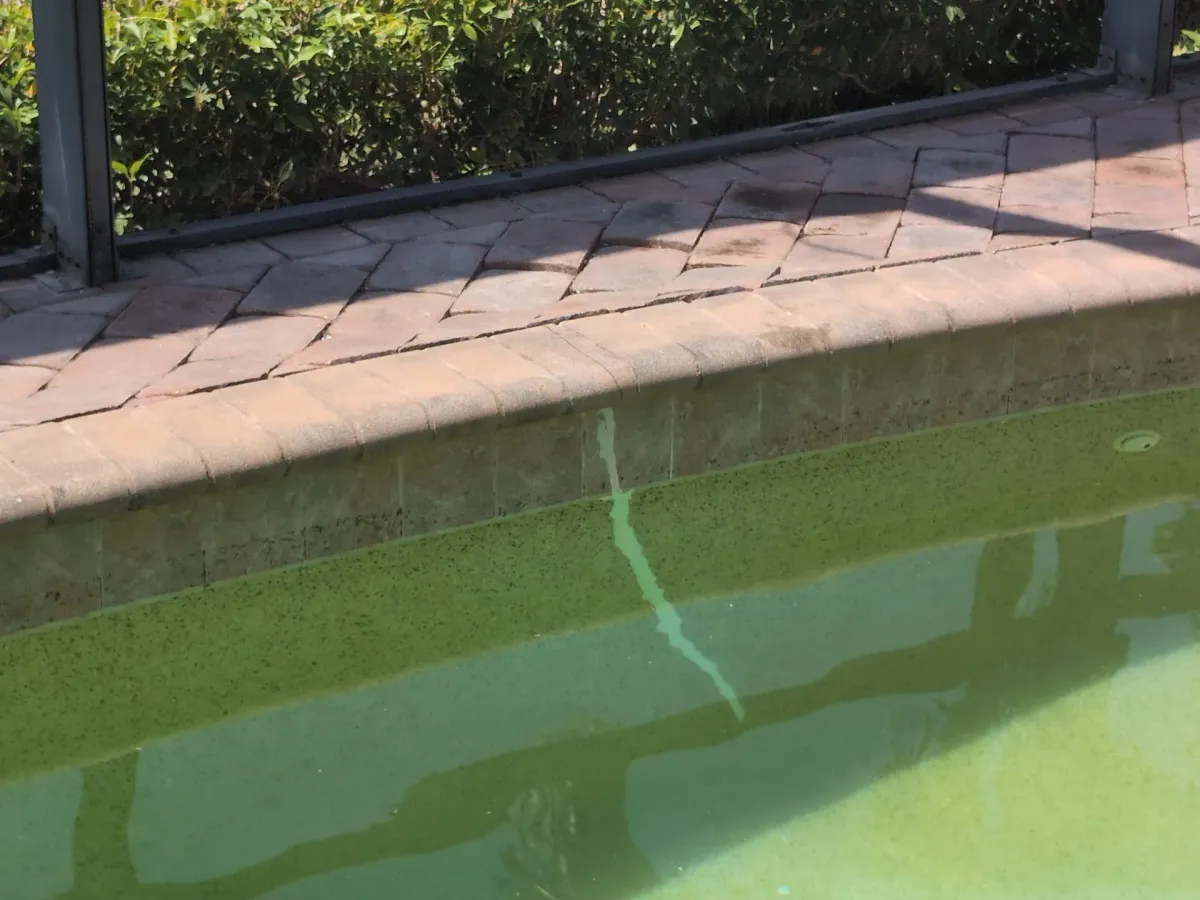
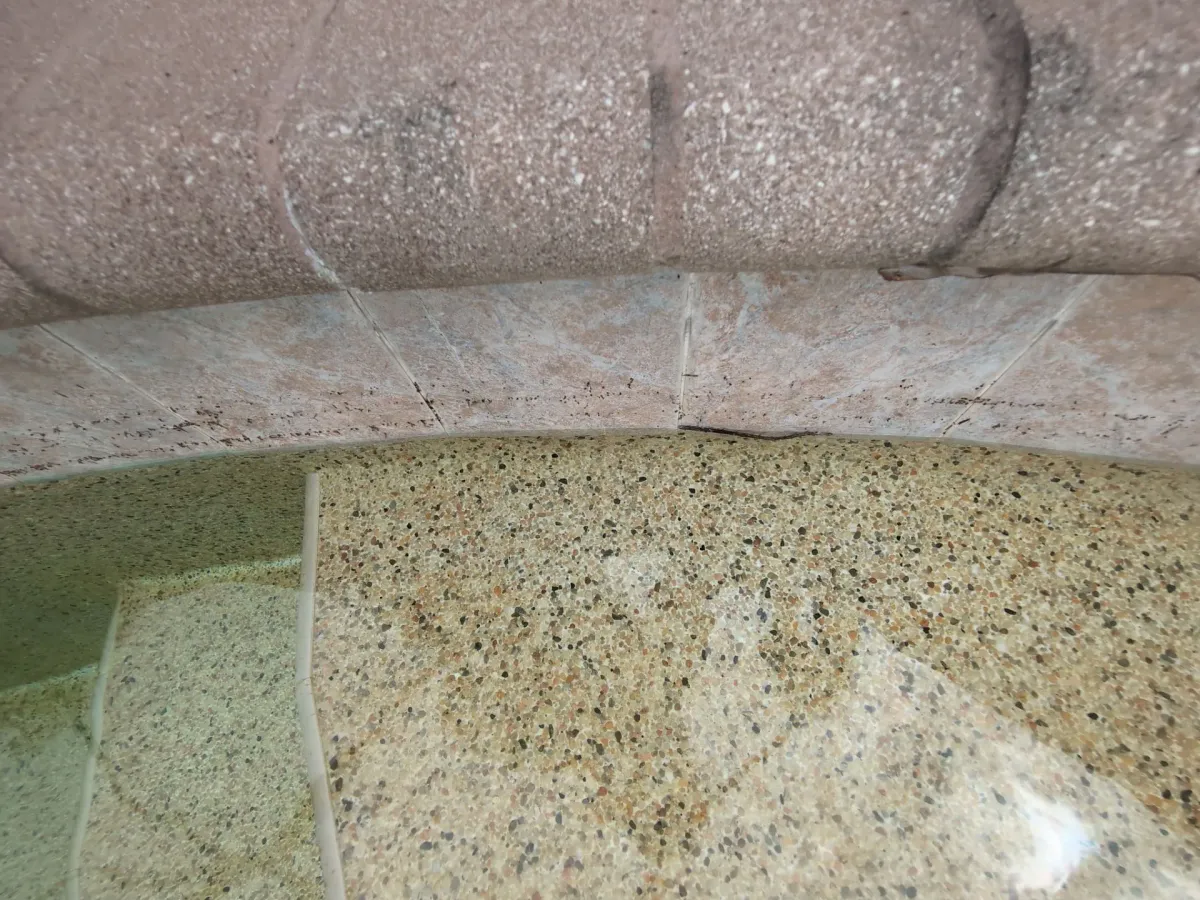
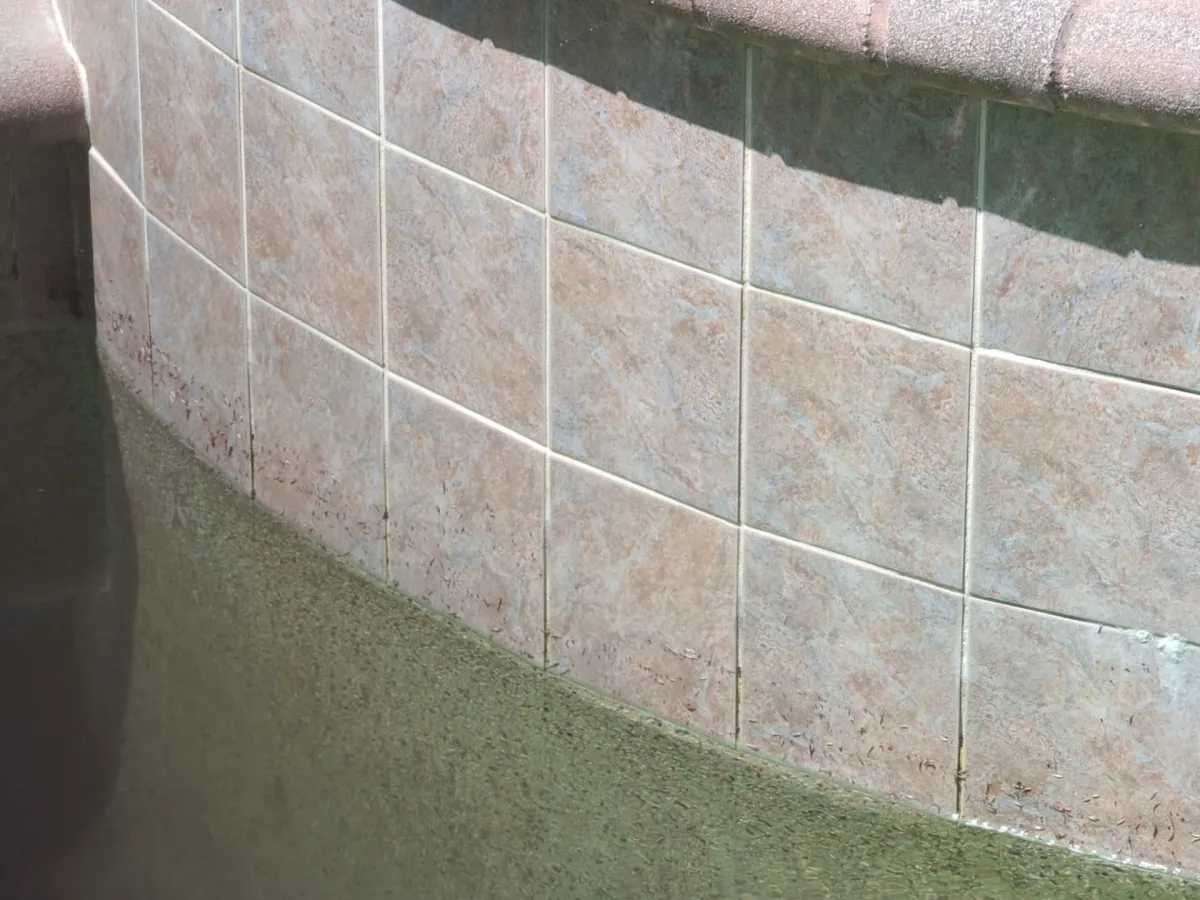
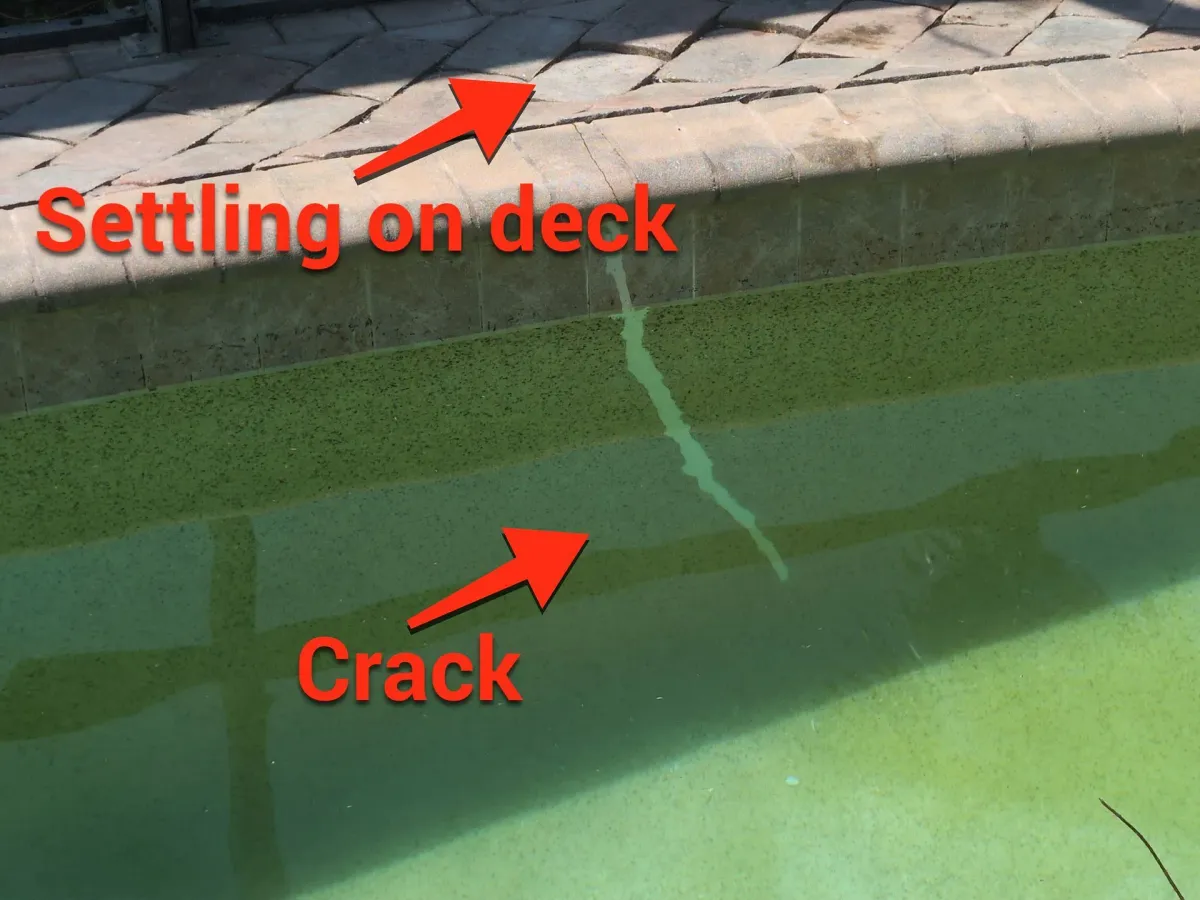
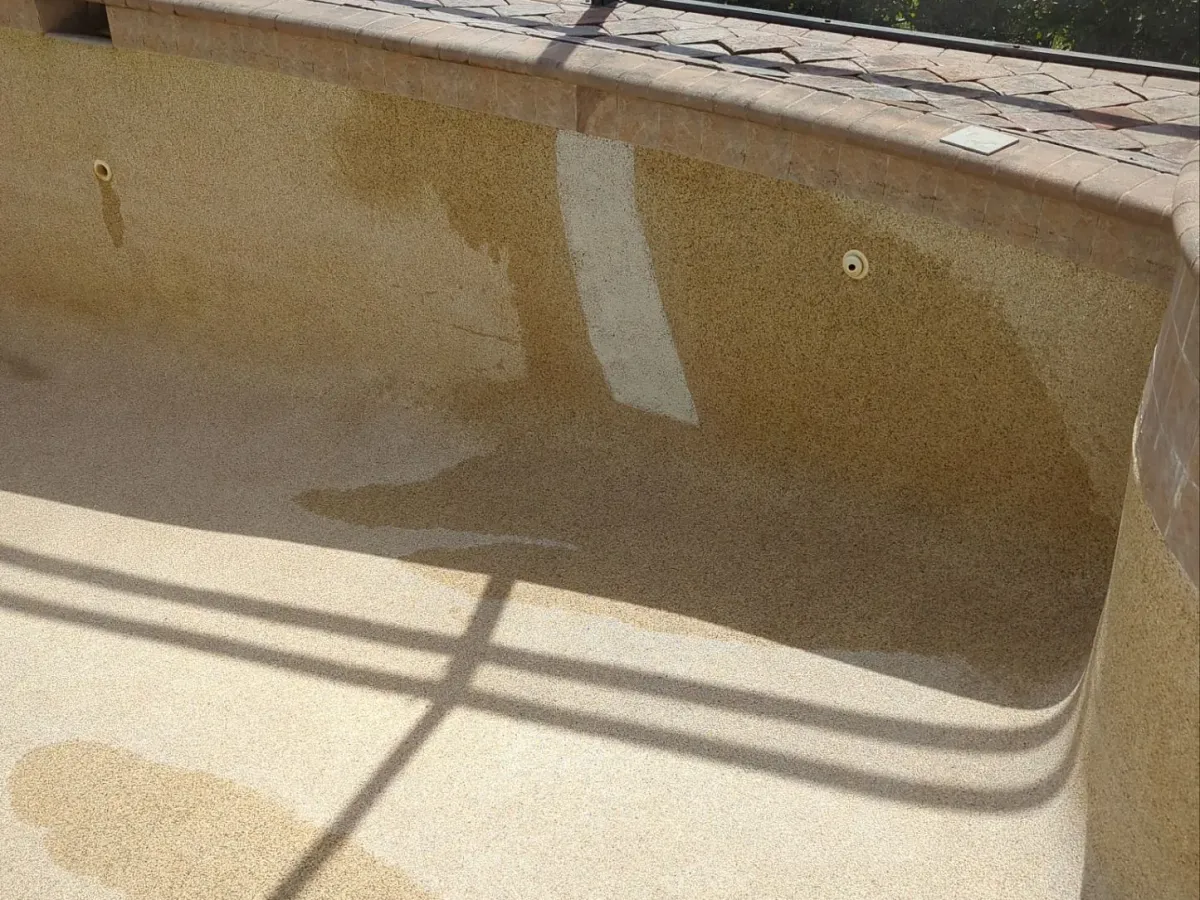
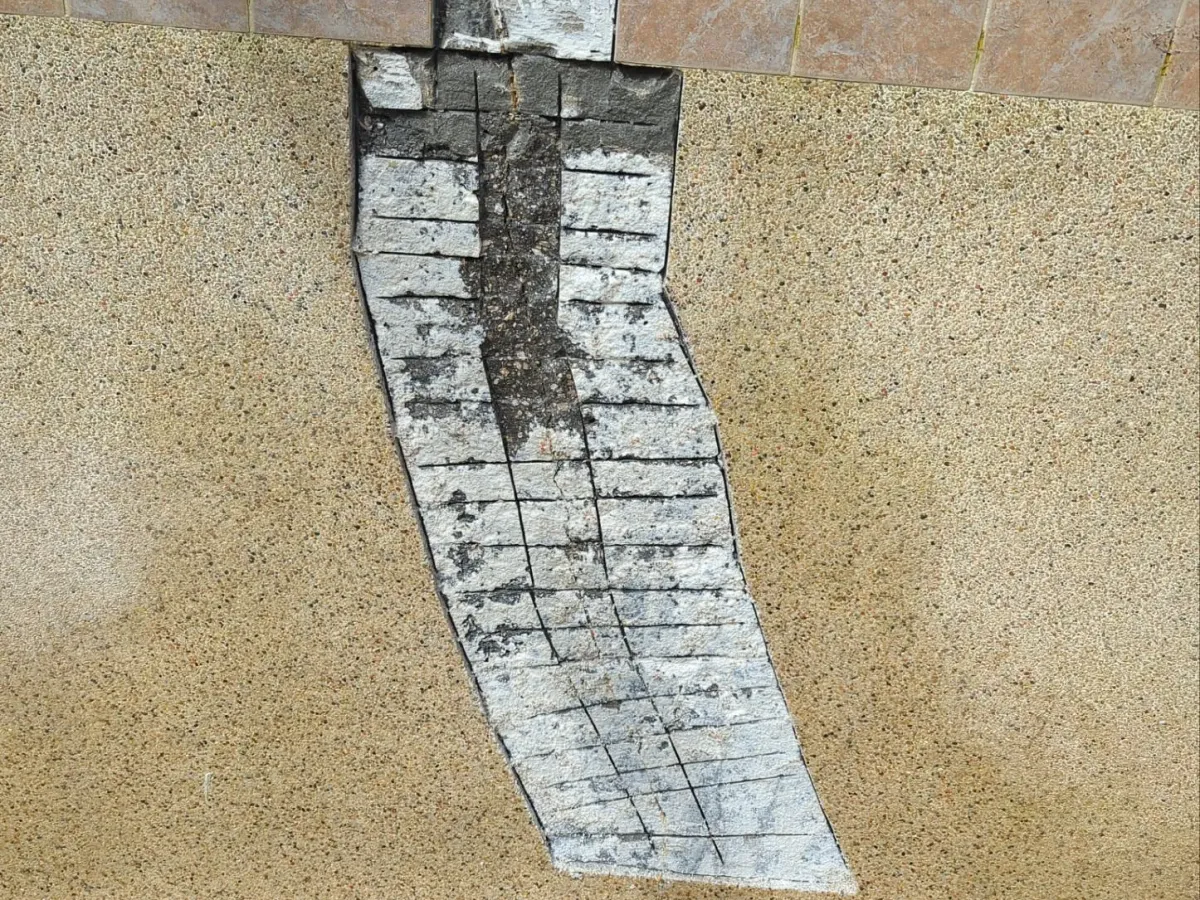
A crack down the pool wall. In the photos of the wall, you can see a light-colored line running from the tile line down toward the floor. In our marked-up photo, it's labeled "Crack." Right above that crack, the pavers show gaps and uneven joints along the coping, labeled "Settling on deck" in the same photo. Close-up shots of the tile line also show a gap where the tile meets the coping and dark lines in the grout near the crack area. The last photo shows the pool drained and the finish cut away along the crack in a grid pattern, from just under the coping down the wall. With the finish removed, you can see the crack in the shell itself, plus the pile of old finish chipped off below.
What it means
This pool had more than one way to lose water. A leaking main drain lets water escape through the floor, where you'll never see it. A crack through the shell is another path for water to get out. The crack lining up with the settled deck is worth noting. When the ground or deck moves, the pool wall and tile line can move with it, and cracks can follow.
That's why we don't just look at the spot that seems obvious. A pool can have a patched drain, a new leak, and a wall crack all at once, and fixing only one leaves you right back where you started. It's also a good reminder that patches don't always last forever. One drain had already been epoxied. Old repairs should be checked along with everything else.
What to do next
If your pool is losing water in Naples or anywhere in Southwest Florida, don't wait. Leaks tend to grow, and water lost under the pool can lead to more settling. Look for clues: cracks in the walls or tile line, gaps in the pavers along the coping, or a drain that looks different from the others are all worth mentioning when you call. Then get a full leak detection. Ours checks the drains, shell, tile line, deck and equipment so nothing gets missed. Leak detection starts at $295.
Pro Pool Team is a licensed pool contractor (CPC1460553) handling leak detection, leak repair, pre-sale and underwater pool inspections, and pool equipment installs and repairs. Losing water? Call Pro Pool Team at (239) 533-5935 or book online at propoolteam.com.
Losing water in Naples?
Call or text (239) 533-5935 or request service. Leak detection starts at $295.